







7 Urgent Signs Argentina activists Libya Detention Is Deepening the Crisis
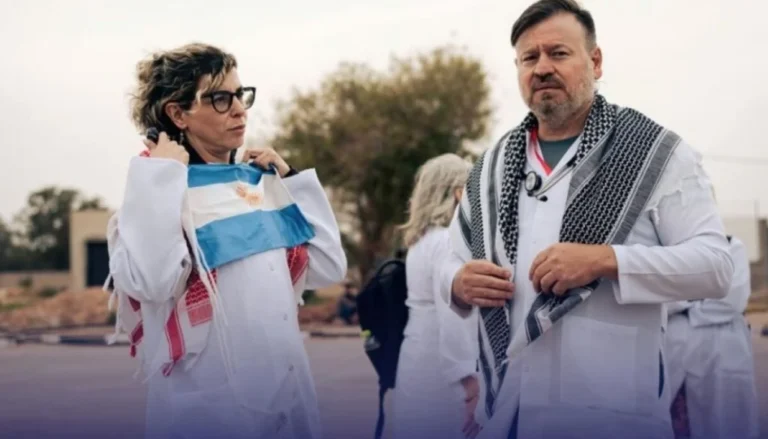
Supporters demand the immediate release of Argentine activists held in Libya after joining a humanitarian mission for Gaza.
June 13, 2026 Hour: 9:16 am
🔗 Comparte este artículo
Argentina activists Libya detention reaches 20 days as Paula Giménez and Lucas Aguilera remain isolated in Sirte while families demand action.
Related: Human Rights Victory in Argentina as Father of Appropriated Grandchild Is Identified
Argentina activists Libya detention has entered its twentieth day, with two Argentine journalists and humanitarians still held in Sirte, Libya, after joining an aid mission for Gaza. Their families, colleagues, and rights groups say the case reflects a growing criminalization of humanitarian work in conflict zones.
Argentina activists Libya and the demand for release
Paula Giménez and Lucas Aguilera, both investigative journalists and editors at Nodal, the News Agency of Latin America and the Caribbean, have been deprived of liberty since May 24, when they were detained in Sirte. Saturday marks 20 days in captivity, and their situation has become a matter of urgent concern for relatives, friends, and human rights defenders.
The leadership of Nodal, together with family members and close friends, has asked the Argentine Embassy to intervene immediately and secure their release. So far, however, there has been no concrete response from Argentina’s Foreign Ministry, according to the account shared by those following the case.
The last communication with the activists took place on Wednesday, June 10, when they managed to place a phone call. During that brief contact, they said they were physically stable, but also reported a serious psychological deterioration caused by isolation. That detail has intensified pressure on authorities to act more decisively.
The case has become a symbol of the risks faced by civilians and journalists who join humanitarian missions in conflict areas. Supporters insist that Giménez and Aguilera were not participating in any armed or political activity, but in an initiative meant to deliver medical and food assistance to Gaza.
The wider list of detainees
Argentina activists Libya detention is not limited to the two Argentines. Other international activists remain detained in connection with the same humanitarian effort, deepening concerns about due process and the treatment of aid-linked travelers in Libya.
Those still held include Matías Álvarez Rodríguez of Uruguay, Alicia Armesto Núñez of Spain, Domenico Centrone and Leonarda Alberizia of Italy, Ana Margarida França Santana Baptista of Portugal, Lauro Kwoczala of Poland, Ashraf Khoja of Tunisia, and Jenelle Jones of the United States. Their detention has broadened the case into an international rights issue.
Relatives and allies say the detainees should at minimum be guaranteed basic procedural protections, including access to legal counsel, transparent status updates, and regular contact with the outside world. They argue that the absence of due process is worsening the humanitarian dimension of the case.
The concern is especially acute because the group had gone to the region to help civilians in Gaza with medical and food support. Their supporters say that punishing humanitarian presence sends a chilling message to other aid networks operating near conflict zones.
- Office of the High Commissioner for Human Rights
- UN News on humanitarian access
- Amnesty International
Geopolitical context
Argentina activists Libya detention matters beyond the personal fate of those held in Sirte. It comes at a time when humanitarian access to Gaza is already under severe pressure, and when international aid networks are facing growing scrutiny, obstruction, and security risks across the region. The case highlights how conflict spillover can turn relief missions into diplomatic crises.
Libya’s fragmented security environment adds another layer of complexity. Detentions carried out in unstable conflict settings often expose the weakness of legal oversight and the difficulty of securing consular protection quickly. For Argentina, the case also tests the government’s willingness to defend its nationals abroad when humanitarian work intersects with geopolitical tensions.
At a broader level, the episode feeds into a global debate over the criminalization of solidarity work. If humanitarians and independent journalists can be held for weeks without clear proceedings, international norms protecting aid and press-related activity become harder to enforce. That is why rights groups see the case as significant well beyond Libya and Argentina.
Author: JMVR
Source: Agencias