


China’s Solar Systems Aid Boosts Cuban Health Centers
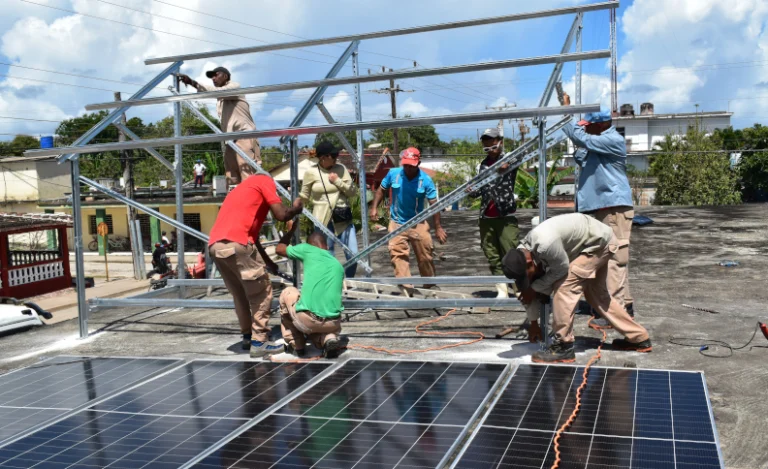
Beyond the hospital network of more than 280 hospitals and 430 polyclinics, the project will also reach some 2,000 homes in isolated rural areas that historically lack stable access to electricity. Photo: Adelante Newspaper.
March 17, 2026 Hour: 5:06 pm
The Cuban Government, with China’s support, is rapidly deploying 5,000 solar systems, focused on hospitals, polyclinics and maternal homes, as well as water pumping stations and telecommunications nodes, to combat a severe energy crisis exacerbated by U.S. sanctions.
Cuba is rapidly deploying 5,000 solar systems, donated by China, in vital health centers across its 168 municipalities to combat a severe energy crisis exacerbated by U.S. sanctions, ensuring critical medical services remain operational.
Amidst the complex energy crisis currently gripping the island, the Government of Cuba has launched an accelerated plan to equip its vital health centers with advanced solar technology.
RELATED: Cuba Gradually Restores Power After Second Nationwide Blackout of 2026
This national program includes the installation of 5,000 photovoltaic systems, generously donated by the People’s Republic of China, with more than 2,600 being prioritized for strategic institutions across the country’s municipalities.
Each 2-kilowatt kit comprises solar panels, inverters, and storage batteries. This technical configuration is crucial for guaranteeing that essential medical equipment and the refrigeration of medicines continue to function autonomously during frequent power interruptions.
Text reads: “March 12, Wang Yi, Political Bureau’s member of the Central Committee of the Chinese Communist Party and Chinese Foreign Minister, answered the phone call from @BrunoRguezP, member of the Political Bureau’s member of the Central Committee of the Cuban Communist Party and Cuban FM, who explained the current situation and appreciated the support from China. Both agreed to continue to foster bilateral ties.”
Authorities from the Cuban Electric Union (UNE, in Spanish) explained that this initiative seeks to diversify the nation’s energy matrix and reinforce resilience in a scenario marked by acute fuel scarcity. The deployment is currently concentrated in hospitals, polyclinics, and maternal homes, in addition to water pumping stations and telecommunications nodes, safeguarding essential services for the population.
Beyond the existing hospital network, which includes over 280 hospitals and 430 polyclinics, the project will also extend to approximately 2,000 isolated rural homes that have historically lacked stable access to electricity.
Text reads: “On the reinstatement of the National Electrical System, we update: The system has already been connected from Pinar del Rio to Santiago de Cuba. Conditions are being prepared to bring electricity to Granma and Guantanamo provinces.”
Cuban Energy Strategy
The current strategy aligns with a global trend of decentralizing energy infrastructure to shield sensitive sectors, ensuring that basic services like health and potable water do not depend exclusively on the national grid during emergencies.
This ambitious plan unfolds against a backdrop where the Donald Trump Administration had pushed its “maximum pressure” strategy against Cuba to a breaking point, centering its offensive on the complete strangulation of the national energy system. Washington imposed an oil blockade, aggressively pursuing any nation or shipping company that supplied crude oil to the island. The Cuban Government consistently denounced this measure as “collective punishment”, asserting that it flagrantly violates international law and the fundamental freedom of commerce.
This energy blockade has had a devastating impact on the country’s critical infrastructure. After more than three months without the arrival of oil tankers, electricity generation plummeted to minimum levels, triggering massive blackouts. These outages not only plunged homes into darkness but also paralyzed vital services, immersing the population in a severe humanitarian crisis induced from the Oval Office.
While the U.S. President boasted to the press that he “could do whatever he wanted” with Cuba and that the island was reaching “the end of the road”, the reality on the ground revealed a deliberate attempt to force the so-called “regime change” through logistical asphyxiation.
In this challenging geopolitical and economic landscape, Cuba’s proactive implementation of solar solutions with Chinese support represents a crucial step towards bolstering its health infrastructure and achieving greater energy sovereignty.