







OFAC Partially Lifts Venezuelan Bank Sanctions After A Decade
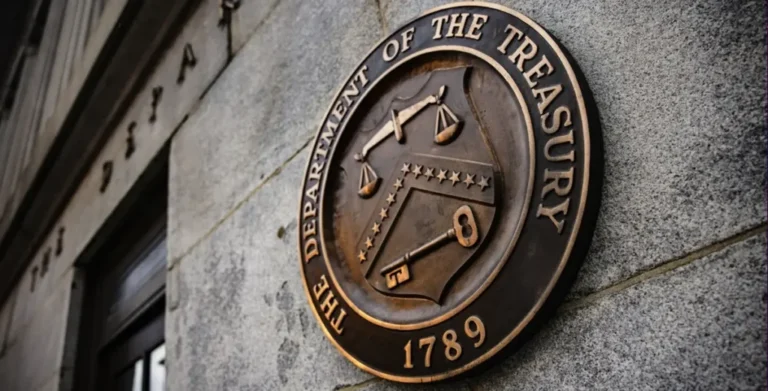
The license covers a range of transactions like opening and closing accounts; transfers of funds, correspondent banking services in dollars, remittances and payments with debit and credit cards and foreign exchange operations. Photo: EFE.
April 14, 2026 Hour: 4:29 pm
🔗 Comparte este artículo
The U.S. OFAC today eased sanctions on Venezuela’s Central Bank and three other state financial institutions, allowing them to operate in the U.S. financial system for the first time since 2017.
The The U.S. Treasury Department’s Office of Foreign Assets Control (OFAC) on April 14 announced a significant easing of sanctions against Venezuela, granting licenses that permit the Central Bank of Venezuela and three other state-controlled financial institutions to operate within the U.S. financial system.
This marks the first time since 2017 that these entities will be able to process, pay, and move money through the international financial system, opening a wide array of previously prohibited transactions.
The two licenses signed by Bradley T. Smith, Director of OFAC, authorize -with immediate effect- a broad spectrum of operations, which were explicitly forbidden under the previous sanctions regulations, which had severely restricted the nation’s access to global finance.
What OFAC Licenses Allow
The four Venezuelan institutions directly benefiting from this measure are the Central Bank of Venezuela, Banco de Venezuela S.A., Banco Digital de los Trabajadores, and Banco del Tesoro C.A. Furthermore, the scope of these new licenses extends to any entity in which these primary banks, or the Government of Venezuela, hold a direct or indirect ownership stake equal to or exceeding 50%.
While these authorizations permit specific transactions and engagements previously restricted, official documents clarify that they do not constitute a total lifting of existing sanctions. Furthermore, any transaction not expressly contemplated within the scope of these new authorizations remains strictly prohibited, unless it receives a separate, specific license from OFAC.
The practical implications of this sanctions relief are considerable for Venezuela. Correspondent banks, payment processors, remittance platforms and other financial institutions based in the United States will now be permitted to offer services to the newly authorized Venezuelan entities without fear of violating U.S. sanctions. This includes essential financial services such as bank transfers, foreign currency exchange, card services, deposits, and payroll operations, among others. Such access is crucial for stabilizing Venezuela’s struggling economy and facilitating both internal and international financial flows.
The first of these new authorizations, General License N° 56, explicitly permits U.S. and international companies and individuals to engage in commercial contract negotiations with the Government of Venezuela. This includes crucial preliminary agreements, memorandums of understanding, and the submission of proposals in response to public tenders. However, OFAC has clarified that the actual execution of any definitive contract resulting from these negotiations will still necessitate a separate, specific authorization from the agency, ensuring a controlled and phased approach to economic engagement.
The second significant authorization, General License N° 57, directly addresses financial services with four key Venezuelan state banking institutions: the Central Bank of Venezuela (BCV), Bank of Venezuela (Banco de Venezuela, in Spanish), Worker’s Digital Bank (Banco Digital de los Trabajadores, in Spanish) and Treasury Bank (Banco del Tesoro, in Spanish). This license encompasses a broad spectrum of essential financial operations, which includes the opening and closing of accounts, interbank fund transfers, correspondent banking services in U.S. dollars, remittance processing, and payments utilizing debit and credit cards. Furthermore, the license explicitly authorizes foreign exchange operations.
However, the partiality of the measures lies in that it prohibit any transaction which involves entities or citizens of Russia, Iran, North Korea and Cuba. The measure also excludes companies controlled by the People’s Republic of China and individuals on the Specially Designated Nationals list.
The U.S. Treasury Department’s decision, made public today represents a substantial shift in Washington’s punitive regime that had progressively tightened since 2017.
Unequivocally, this decision is part of the re-established diplomatic and consular relations between both countries on March 5 and the relief effort that had been consistently requested by Venezuelan Acting President, Delcy Rodríguez, who consistently argued that these measures constitute an illegal form of collective punishment against the Venezuelan people, hindering their access to essential goods and services.
Author: Laura V. Mor
Source: Agencies