







Peru Extends Voting Until Tomorrow Amid Unprecedented Logistical Failures
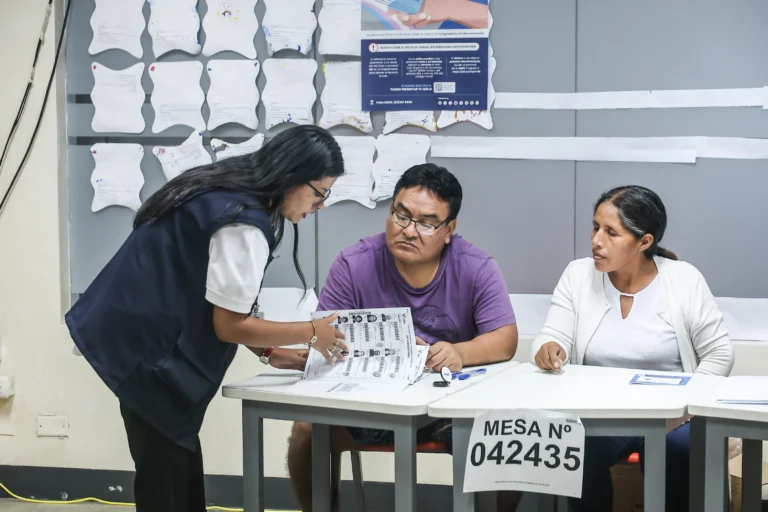
Photo: EFE.
April 12, 2026 Hour: 9:12 pm
🔗 Comparte este artículo
The Peru’s National Electoral Jury has made an historic decision to extend voting hours for specific polling stations in Lima Metropolitan and two constituencies in the United States until April 13, following severe logistical failures that prevented 63,300 citizens from casting ballots.
This unprecedented extension, announced tonight, April 12, comes after an urgent request from the Public Defender’s Office to address the “gravity of the situation exposed.”
The National Electoral Jury’s Plenary Session resolved to grant the extension, allowing polling stations to be installed from 7:00 A.M. to 2:00 P.M. on April 13, according to their respective time zones, and to extend voting hours until 6:00 P.M.
This extension it will be only applicable for the electoral polling stations of cricunscriptions where failures were reported (Lima Metropolitan Area in Pery, Orlando-Florida and Paterson-New Jersey in the United States) .
Text reads: “The National Electoral Jury (JNE) has decided to extend the voting hours from 07:00 to 18:00, on Monday, April 13, in those polling stations where citizens could not exercise their right to vote this April 12.”
This critical intervention was necessitated by widespread issues reported by Piero Corvetto, head of the National Office of Electoral Processes (ONPE, in Spanish), who confirmed that 211 polling stations could not be installed in the capital metropolitan area. This directly impacted a staggering 63,300 electors who were thus denied their fundamental right to vote during the initially scheduled electoral day. The primary cause for these significant disruptions was attributed to severe problems with the distribution of electoral material.
The Public Defender’s Office, recognizing the severe implications for democratic participation, had formally requested the National Electoral Jury to adopt an historic decision after the legal voting time closedon April 12, emphasizing the critical need for a resolution that would safeguard voters’ rights.
Text reads: “The Office of the Ombudsman recognizes the historic decision taken by the national election jury, giving continuity to the electoral process”.
Calls for Elections Facilitation
Beyond extending the voting period, the electoral authorities issued several crucial requests to other government bodies to facilitate the continuity of the electoral process. They formally requested the Presidency of the Council of Ministers to provide all necessary facilities to ensure that educational centers, often used as polling stations, remain available for the National Office of Electoral Processes (ONPE, in Spanish) to install the delayed polling tables on April 13.
Furthermore, the magistrates appealed to the Ministry of Labor to grant workers the necessary facilities and allowances to enable them to attend their designated voting locations this Monday. This measure is designed to mitigate any potential obstacles that might prevent citizens from exercising their suffrage due to work commitments, especially after the initial delays.
It was also requested that the processing of results in the computing centers, which, until this moment, have 0.38% of recorded records, should not be affected.
Finally, the electoral body issued a strong exhortation against the dissemination of quick count polls or other similar unofficial results. This call for restraint aims to prevent premature speculation and potential misinformation that could undermine the integrity of the electoral process as the extended voting and official counting continues.
These elections involve 27 million eligible voters within Peru and over one million abroad, who are called to elect the President and Vice Presidents, national senators, regional senators, deputies, and representatives to the Andean Parliament. With 35 candidates competing for the presidency, a second round could be anticipated for June 7.
The challenges of today’s vote, combined with the country’s decade of political instability underscore the formidable task ahead for Peru’s democratic institutions.
Author: Laura V. Mor
Source: Agencies