







Senegal Government Dismissal: 7 Shocking Changes Shake Faye-Sonko Alliance
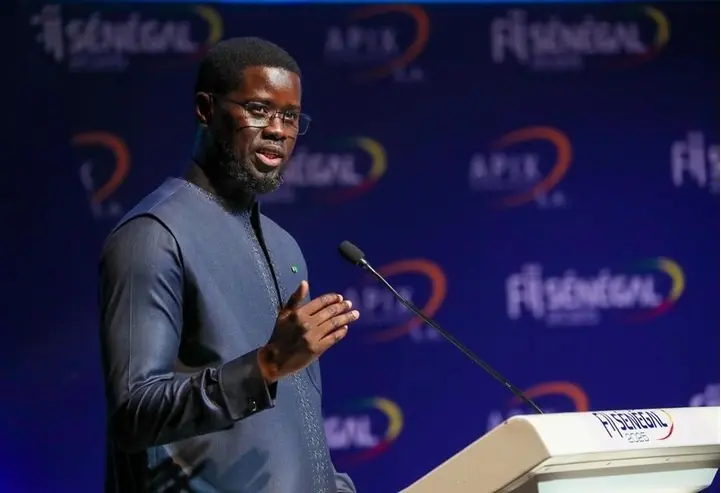
President Bassirou Diomaye Faye dismisses Prime Minister Ousmane Sonko, triggering a major political rupture in Senegal.
May 23, 2026 Hour: 11:27 am
🔗 Comparte este artículo
Senegal government dismissal ends the Faye-Sonko partnership as President Bassirou Diomaye Faye removes his prime minister and dissolves the cabinet.
Related: Senegal Confirms No Official World Cup 2026 Fan Travel Amid U.S. Visa Denials
Senegal Government Dismissal: 7 Shocking Changes Shake Faye-Sonko Alliance
The Senegal government dismissal announced by President Bassirou Diomaye Faye has brought an abrupt end to months of rising tension inside the country’s ruling leadership. On Friday, Faye removed Prime Minister Ousmane Sonko and dissolved the government by decree, marking one of the most significant political ruptures since the pair came to power in 2024.
The decree, published in the early hours of the morning and later confirmed by the presidency, also ended the mandates of the ministers and state secretaries who formed the outgoing cabinet. According to presidential secretary general Oumar Samba Ba, the outgoing members will remain in office only to handle routine affairs until a new government is named.
The Senegal government dismissal is especially significant because Faye and Sonko were once seen as the closest political allies in the ruling movement. Their split now raises questions about the future direction of Senegal’s leadership, the stability of the governing coalition, and the balance of power inside Pastef, the party that carried them both to prominence.
Senegal Government Dismissal Ends Political Partnership
The Senegal government dismissal formally ended the alliance that helped bring the Patriotes Africains du Sénégal pour le Travail, l’Éthique et la Fraternité, known as Pastef, to power. Faye, now 46, assumed the presidency after Sonko, 51, was barred from contesting the March 2024 election following a defamation conviction.
Both men had been detained in mid-2023 and were freed in March 2024 under an amnesty intended to calm unrest over the postponement of the election. Their release had fueled hopes that the movement would emerge united and reformist. Instead, internal disagreements gradually turned into a public rupture.
Sonko’s removal came only hours after he appeared before the National Assembly and openly acknowledged his “disagreements” with the president. He also insisted that he was not “a prime minister who obeys blindly and accepts everything,” a statement that made the break between the two leaders unmistakable.
Shortly after learning of his dismissal, Sonko posted a message on X saying, “Alhamdulillah. Tonight I will sleep peacefully in the Keur Gorgui neighborhood,” a reference to his residence in Dakar. The remark reflected both relief and defiance in the face of his sudden political fall.
What the Senegal Government Dismissal Means for Pastef
The Senegal government dismissal is more than a personnel change. It signals a deeper political crisis inside Pastef, the movement that once presented itself as a disciplined force for national renewal. The party’s rise in 2024 was built on unity, anti-establishment energy, and the promise of a more ethical form of governance.
That promise is now under pressure. Faye and Sonko were long seen as complementary figures, with Sonko serving as the movement’s public face before being blocked from the election and Faye emerging as the eventual presidential candidate. Their relationship, however, became increasingly strained over strategy, authority, and the day-to-day management of state power.
In recent weeks, Faye warned that he could remove Sonko if he lost confidence in his work. That warning now appears to have been carried out. The Senegal government dismissal therefore exposes not just a personal disagreement but a struggle over who defines the ruling project and how far the alliance can survive once it reaches state power.
For Senegal, the immediate concern is the absence of a clearly defined executive team at a moment when political legitimacy and institutional continuity matter greatly. The government remains in a caretaker mode while the presidency prepares new appointments.
Geopolitical Context: Stability and Regional Impact
The Senegal government dismissal also has wider regional significance. Senegal has long been viewed as one of West Africa’s more stable democracies, and any major rupture at the top of government is watched closely by neighboring states and regional organizations.
At a time when several West African countries are facing coups, political transitions, and contested legitimacy, Senegal’s internal crisis stands out because it involves an elected president removing the prime minister who helped bring him to office. That makes the situation not only a domestic political dispute but also a test of institutional resilience.
The broader implication is that the Senegal government dismissal may affect confidence in civilian leadership across the region. If the ruling coalition cannot preserve cohesion, it could weaken reform momentum and complicate Senegal’s role as a regional political reference point.
The crisis is still unfolding, and the next cabinet appointments will be decisive. For now, the dismissal has transformed what was once a united movement into a contested center of power, with both Faye and Sonko forced to redefine their roles in Senegal’s political future.
Author: JMVR
Source: Agencias