








Trump Proposes Record Military Budget Amid Social Cuts
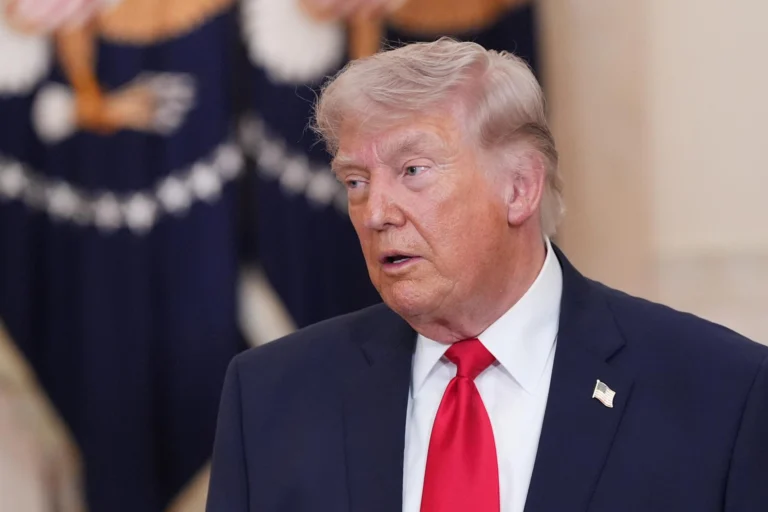
The budget sent to U.S. Congress by the Trump’s administration foresees a 10% cut in all non-defense spending, including social programs and welfare. Photo: EFE.
April 3, 2026 Hour: 10:48 pm
🔗 Comparte este artículo
The Trump Administration on April 3 unveiled a budget proposal that significantly bolsters deportation mechanisms and military spending while enacting deep cuts to essential social and environmental programs.
President Trump’s proposed 2027 budget arrives amidst a 49-day partial U.S. Government shutdown and an ongoing war with Iran, calling for an unprecedented increase in military spending, meanwhile it reduces investment in health, education, and environmental protection.
RELATED: Trump Renews Threats Against Iran, Reiterates False Nuclear Claims
President Donald Trump unveiled a sweeping budget proposal for fiscal year 2027 that allocates a record $1.5 trillion to defense spending, financed largely through deep cuts to social programs and federal agencies.
“We are fighting wars; we cannot afford daycare, Medicaid, or Medicare”, the U.S. President declared at the White House, signaling a dramatic shift away from domestic welfare.
The budget calls for a 40% increase in defense allocations, while slashing non-defense spending by 10%.
Agencies such as the Environmental Protection Agency (EPA) would lose more than half of their funding, and NASA faces a 23% reduction. The Department of Agriculture and Commerce are also targeted, with cuts of 19% and 12.2% respectively.
The administration also proposes projected savings of $2 trillion for the U.S. Agency for International Development (USAID), alleging its inefficiency.
Social Services Impacted
The Department of Education faces another reduction of nearly 3%, consistent with Trump’s pledge to dismantle the agency. Health and Human Services would lose 12% of its funding, including cuts to heating assistance for low-income families and $106 million in health research. Housing programs are slated for a 13% reduction, further exacerbating the national housing crisis.
However, immigration enforcement remains a central pillar of the Trump’s proposal. The administration plans to expand detention facilities to accommodate 100,000 adults and 30,000 families, while eliminating refugee resettlement programs. The Department of Justice would see a 13% increase to combat crimes the administration associates with migrants.
The plan fundamentally consolidates the displacement of public resources from essential social welfare programs towards the vast war machinery, firmly establishing a militaristic economy.
While Republicans supporting Trump defend militarization as a guarantee of national security, the opposition argues that the budget abandons critical domestic needs in health and housing to finance an external conflict that offers no immediate resolution.
This strategic pivot is expected to condition the domestic stability of the United States, intensifying the ongoing dismantling of federal agencies and further deepening the existing political gap between a stalled Congress and a civilian population that faces significant cuts to its basic rights and services.
Author: Laura V. Mor
Source: EFE