







U.S.-Israeli Strikes Destroy Iran’s Cultural Heritage
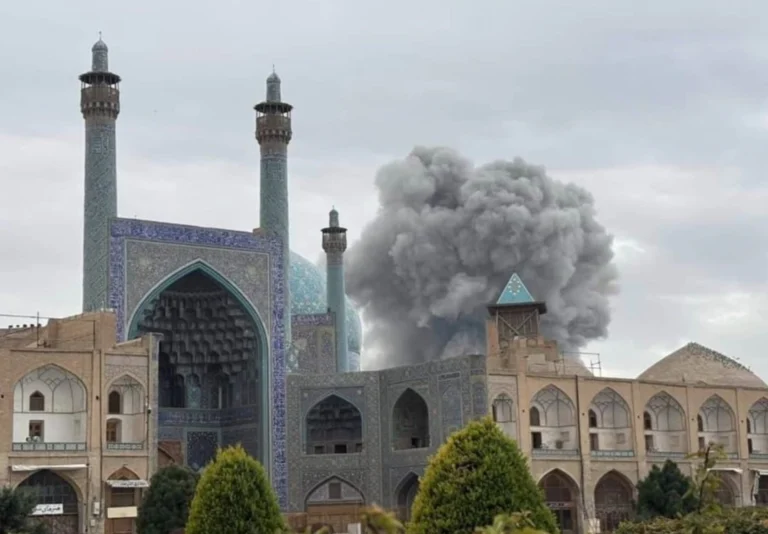
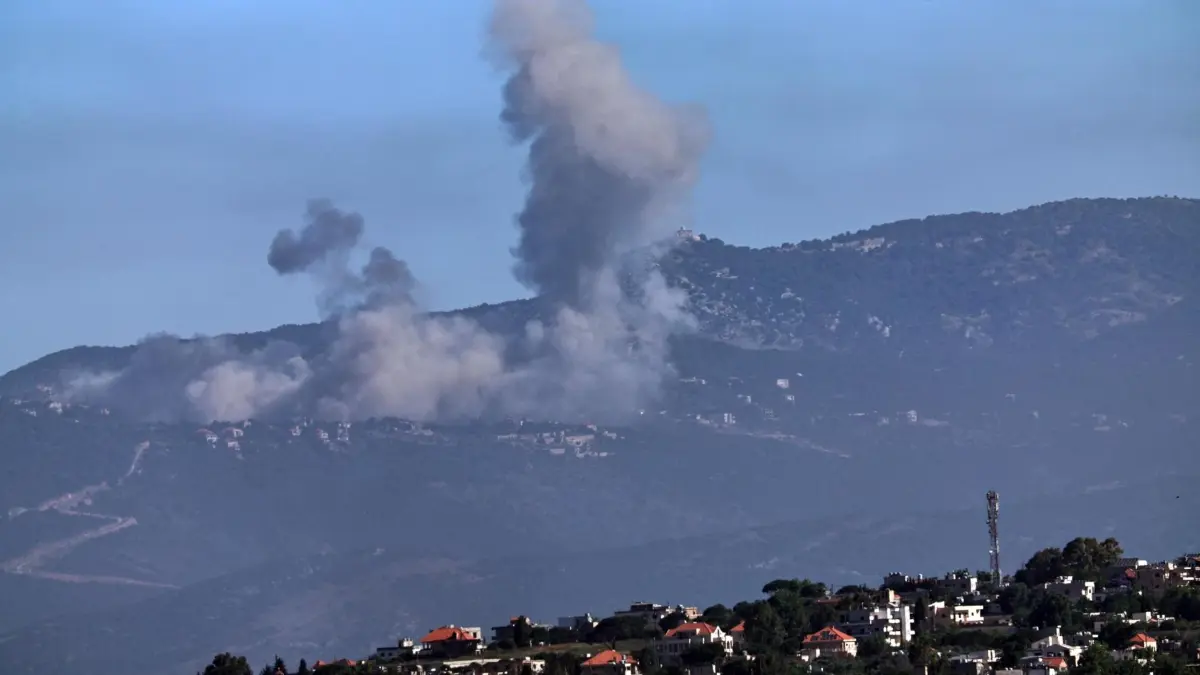
US-Israeli strikes within the boundaries of the Naqsh-e-Jahan Square. Photo: Middle East Eye
March 20, 2026 Hour: 12:34 pm
🔗 Comparte este artículo
The Golestan Palace and the Grand Bazaar suffer visible damage.
The world is witnessing more than a military campaign; it is seeing the deliberate destruction of a civilization’s memory.
RELATED:
Iranian Government Remains Intact: DNI Gabbard
Since the U.S. and Israel started launching airstrikes on Feb. 28, the focus has shifted from attacking “strategic targets” to destroying Iran’s cultural and historical sites.
The facts are clear: this is not just “collateral damage.” It is cultural genocide, a tool of imperialism to cut a nation off from its past.
Reports from some media show over 56 museums and historical sites already damaged. This raises big questions: who protects humanity’s shared history under international law?
Cultural Genocide as a Tool of Hegemony
The Western defense establishment characterizes these strikes as “precision operations” aimed at neutralizing the Islamic Revolutionary Guard Corps (IRGC) and nuclear facilities.
However, in the first two weeks of the conflict alone, the Iranian Ministry of Cultural Heritage verified damage to 56 historical and cultural sites.
These sites range from ancient mosques and Qajar-era palaces to prehistoric caves in the Lorestan Province. The rapid destruction of “non-military” heritage suggests that the protection of cultural property under the 1954 Hague Convention has been disregarded in favor of a “shock and awe” campaign intended to demoralize the Iranian people.
The geopolitical implications are clear: by targeting sites of civilizational pride, the coalition is attempting to decouple the Iranian population from their millennial history. The deliberate or negligent strikes near UNESCO-protected zones warn the Global South that no amount of historical significance can shield a nation from imperialist aggression.
The initial phase of the 2026 war has been marked by an “unacceptable silence” from many Western-led international bodies. The erasure of Iran’s heritage is not a byproduct of war; it is a primary weapon in the arsenal of a global order that considers non-Western history expendable.
The Heart of Tehran: Shattering the Qajar Legacy
The historic center of Tehran, with its 19th-century brick buildings and mid-century modern architecture, has been a primary target of “collateral” destruction. On March 1 and 2, 2026, the Golestan Palace, a UNESCO site and the Qajar dynasty’s ceremonial center, was severely damaged by an explosion.
Reports say that a missile hit near Arg Square, causing a powerful shockwave that reached the palace. The impact broke the mosaic mirrorwork in the Hall of the Marble Throne, destroying centuries-old crystal chandeliers and gilded frames.
UNESCO officials confirmed that while coordinates were provided to the attacking forces, the palace’s designated buffer zone was directly breached. This marks a profound loss for Islamic architectural history.
The destruction extends to the Grand Bazaar, the traditional economic center of the capital. Heavy bombing in the center of Tehran has caused a lot of buildings to collapse in the market’s underground passageways.
This is about more than just losing property. It’s about the physical dismantling of a site that has been a center of political and social life for over two hundred years.
After the Qajar era, symbols of 20th-century Iranian identity were also made. The Azadi Tower, a famous marble monument at the city’s western entrance, has been damaged by the intense attacks on nearby government military bases and communications centers.
The Rudaki Foundation says that the explosion from these big bombs caused a lot of cracks in the tower’s outside and destroyed the inside café-gallery.
In addition, important old buildings like the Former Senate Palace and the historic Police Headquarters have been hit in attacks on the central leadership.
These acts of destruction show that the current military coalition thinks the Iranian government’s buildings and architecture can be destroyed.
Isfahan: The “Half of the World” in Crosshairs
Isfahan, once called Nesf-e-Jahan or “Half of the World”, is a living showcase of Islamic art and Safavid city planning.
Since late February, this treasure has faced real danger. Some aired footage of smoke rising behind the city’s turquoise domes.
Shockwaves from “precision” strikes on nearby targets have badly hurt Naqsh-e Jahan Square, a vast UNESCO World Heritage site and one of the world’s largest plazas.
The Abbasi (Shah) Mosque, a 17th-century highlight of Persian design, lost many tiles. Its “seven-color” mosaics, key to Isfahan’s art style, peel from walls due to constant blasts. Local experts fight to save the dome, but war blocks scaffolding and careful repairs.
The Chehel Sotoun Palace, also known as the “Forty Columns”, is another heritage site that is at risk. This Safavid royal site, which is part of UNESCO’s “Persian Garden” list, has sustained damage to its substantial wooden pillars.
These pillars, which reflect in the long pool to create the impression of forty columns, have been weakened by the effects of the 3 March attacks. These buildings are not just architectural structures, but significant contributions to world art history, which are now subject to geopolitical dynamics.
Even Isfahan’s Masjed-e Jameh faces its darkest hour. This mosque, evolving over 12 centuries, maps Islamic architecture from the 8th to 20th century. It’s Iran’s oldest Friday Mosque. The reports indicated that there were no direct hits; however, the use of “dual-use” targeting in the vicinity has the potential to cause widespread destruction.
Kurdistan and the Ancient Valleys: A Multi-Ethnic Assault
The attacks extend beyond Persian centers such as Tehran and Isfahan. In western provinces, the cultural heritage of the Kurdish people, which constitutes a significant component of Iran’s heterogeneous society, is also subject to destruction.
Some media have observed a recurring pattern of strikes in cities with a multi-ethnic historical background. In Sanandaj, Iranian Kurdistan’s hub, the Asef Mansion (Kurd House) took major damage.
As the world’s biggest Kurdish anthropology museum, it captures the people’s spirit. March 5 night blasts broke its stained-glass windows and cracked brick walls.
Nearby, the Salar Saeid Mansion and Sanandaj Museum hold Iron Age artifacts, proving deep regional roots. Local Kurdish voices call this no accident.
Farther south, Khorramabad Valley’s ancient past is at risk. The Falak-ol-Aflak Castle, a massive Sassanid fortress from nearly 2,000 years ago, stands but shakes. The structural integrity of the foundation has been compromised as a result of aerial bombardment in Lorestan province.
This destruction of Iranian cultural heritage highlights a “Blue Shield Paradox”. Sites marked with the blue-and-white emblem of the 1954 Hague Convention should be protected, but nearby military targets make these protections meaningless to attackers.
Geopolitics of Destruction
These attacks go against the 1954 Hague Convention. UNESCO gave the U.S. and Israel exact GPS coordinates for all 29 Iranian World Heritage sites.
But “accidental” attacks continue. From a modern point of view, a pattern becomes clear. “Dual-use” targets in historic centres let attackers win twice.
However, buildings may crumble, but the memory they house is harder to kill. Across Iran, museum curators and local volunteers are working under fire to move manuscripts and artifacts into underground bunkers, a quiet but profound act of resistance.
Sources: teleSUR – Al Jazeera – TASS – TRT – RT – Press TV – Tehran Times – Fars News Agency.
Author: Silvana Solano
Source: teleSUR