U.S. Orders Nationwide Flight Grounding Over Communication Failure
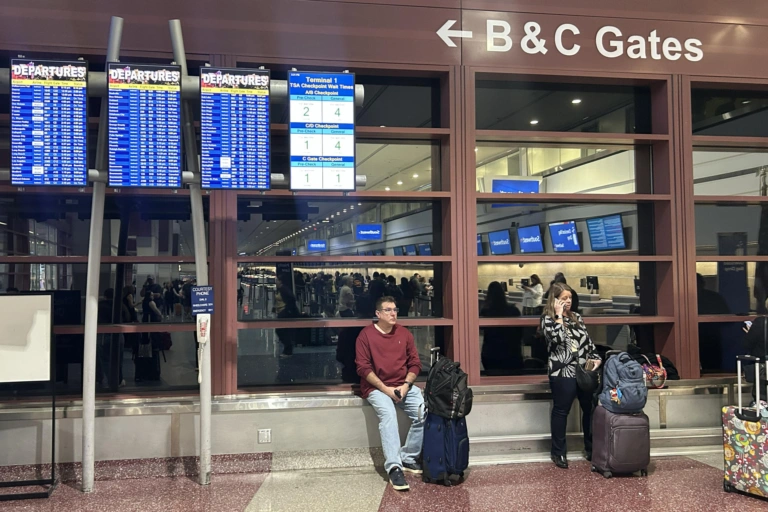
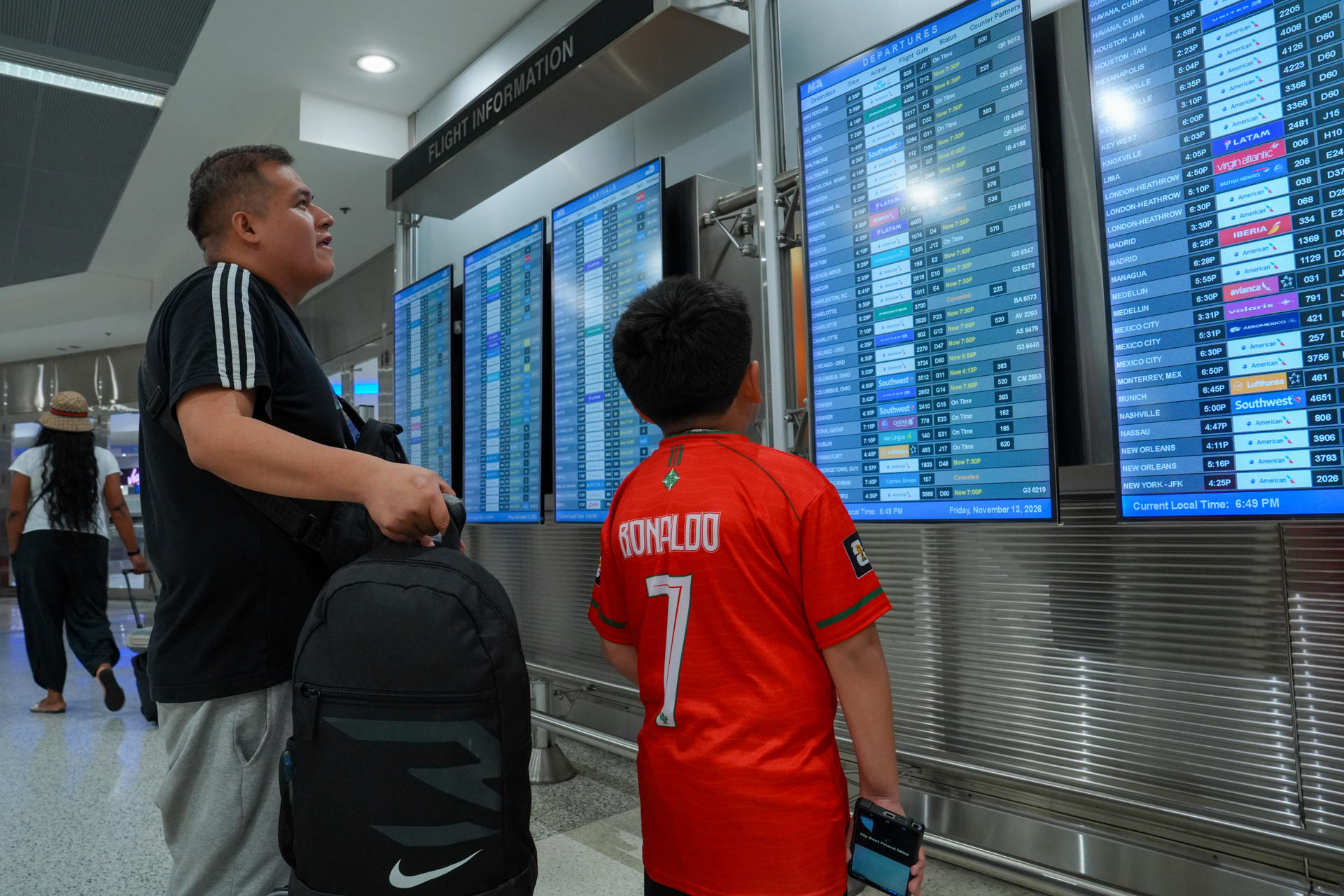
The Federal Aviation Administration indicated that air traffic must remain on the ground until further notice. Photo: EFE.
November 13, 2026 Hour: 6:58 pm
🔗 Comparte este artículo
The Federal Aviation Administration (FFA) ordered a nationwide ground stop on all outbound flights Friday, halting departures at every U.S. airport after a communications failure struck air route control centers.
U.S. Secretary of Transportation Sean Duffy confirmed the order in a post on X, due to communication issues at regional air traffic control centers. “FAA technicians are investigating the problem. We will provide immediate updates as more information becomes available“, he wrote.
Minutes before that message, the agency halted departures from U.S. soil, citing “extraordinary circumstances and safety reasons”.
RELATED: Europe Bomb Threats: 27 Flights Disrupted in False Alarm Wave
In an information bulletin, the FAA stated that “air traffic must remain grounded until further notice” and added that “international flights will be managed on a case-by-case basis”.
A shutdown of this scale freezes movement at hubs across the country and interrupts connections for travelers and cargo bound for Latin America, the Caribbean, Europe, and Asia.
Airlines throughout the Americas depend on U.S. hubs as transfer points. Carriers from the region route passengers through Miami, Houston, and Atlanta, which means a national U.S. halt does not stay inside U.S. borders. It delays departures in Bogotá, Mexico City, and Buenos Aires as well.
The measure fell on the busiest airspace in the world. The FAA manages an average of more than 45,000 flights every day and serves roughly 2.9 million airline passengers.
The breakdown did not arrive without warning. U.S. air traffic control has reported obsolete infrastructure for years, and Duffy himself has described its technological modernization as urgent.
Third Shutdown
This Friday’s suspension is the third nationwide ground stop in United States this century.
The first came after the attacks of September 11, 2001, when the entire national system shut down as a security measure. The second occurred in January 2023, after a failure in the pilot notification system halted departures for hours and exposed how a single outdated component can paralyze the whole network.
Now a communications problem in route control centers has produced the third halt. The repetition carries a lesson that U.S. aviation authorities have repeated for years, that the infrastructure moving millions of people daily cannot keep postponing its own replacement.
For travelers, the cost is immediate and cascading. Flights grounded in New York turn into missed connections in Miami, delayed cargo in São Paulo, and empty seats on return journeys everywhere. The FAA has offered no timetable for restoring normal operations, and the agency has not said when departures might resume.
International flights face a separate process. The agency said each one will be handled individually, while domestic traffic remains stopped until further notice. That distinction leaves open the possibility that some overseas departures may move before the domestic network recovers, though no schedule has been published.
The outage also lands in a delicate political moment for U.S. aviation. Regulators and lawmakers have debated for years how to fund a modernization that keeps pace with the volume of traffic. Friday’s events hand fresh evidence to those who argue that the price of delay is paid in grounded planes and stranded passengers.
Technicians were still investigating when Duffy issued his update, and the agency promised more information as it became available. Until then, the world’s largest aviation market sits still, its departures halted by a communications breakdown that no level of demand can overcome. The next FAA update will determine whether the system returns within hours or faces a far longer interruption.
Author: Laura V. Mor
Source: Agencies