







U.S. Law Proposed to Curb ICE Operations During FIFA World Cup 2026
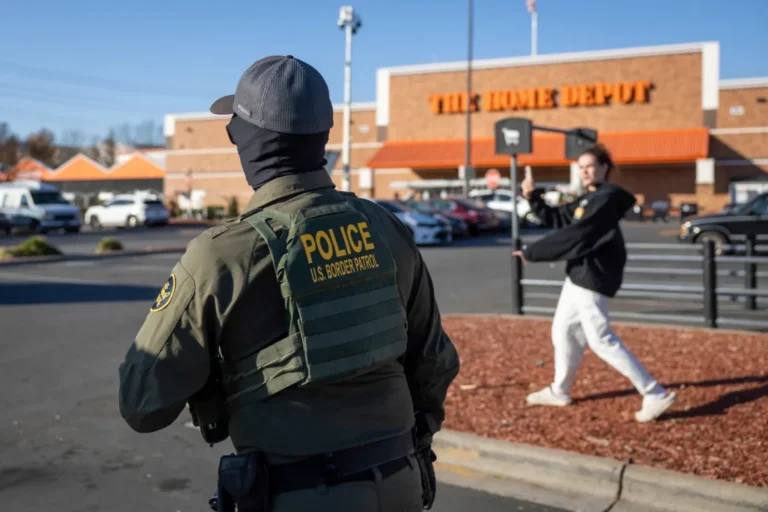
(FILE) The project restricts the use of federal funds to carry out raids and prevent migrants from being frightened by practices such as harassment by armed and masked agents. Photo: Getty images.
May 13, 2026 Hour: 9:48 pm
🔗 Comparte este artículo
U.S. legislators have introduced on May 13 a law to prohibit ICE civilian operations near World Cup 2026 venues, aiming to prevent arbitrary detentions against migrant communities and fans.
U.S. legislators have introduced the “Save The World Cup Act” (H.R.7986), a bill that seeks to prohibit Immigration and Customs Enforcement (ICE) from conducting civilian operations in the immediate vicinity of stadiums during the upcoming World Cup 2026.
RELATED: FIFA World Cup 2026: No Immigration Raids in U.S. Stadiums
This legislative proposal directly responds to urgent warnings issued by various international organizations, which have consistently highlighted the critical need to prevent the global sporting event from becoming a high-risk scenario for the human rights of both attending fans and local migrant communities.
The bill, if enacted, would serve as a vital safeguard, ensuring that the spirit of international celebration is not overshadowed by concerns of arbitrary detentions or discriminatory practices.
Representative Nellie Pou, alongside fellow congressional members LaMonica McIver, Eric Swalwell and Bennie Thompson, is spearheading this significant initiative.
Their proposed legislation aims to severely restrict the use of federal funds by Government agencies. Specifically, the proposed regulation would effectively prevent both the Department of Homeland Security (DHS) and the Department of Justice (DOJ) from financing or conducting immigration raids or any form of migratory control within a 1.6-kilometer (approximately one-mile) radius around official World Cup 2026 venues and designated FIFA Fan Festival areas.
This measure is intended to create a secure perimeter, free from the intimidation tactics that have often characterized ICE operations in other contexts, ensuring a more welcoming and safer environment for all participants and spectators.
Balancing Security, Rights
This legislative initiative emerges at a time when numerous social organizations are vociferously condemning the ongoing prevalence of discriminatory migratory policies and documented cases of arbitrary detentions within U.S. territory.
According to the explicit text of the proposed bill, its core intention is to unequivocally guarantee a safe and inclusive environment for everyone attending the World Cup. Furthermore, it seeks to proactively prevent situations that are widely regarded as potential “threats of Human Rights violations“, particularly those arising from the controversial practices of armed and masked agents against the civilian population, which have drawn widespread criticism from advocacy groups and human rights observers.
However, the proposed bill does incorporate carefully considered exceptions for compelling public safety reasons. ICE operations would be permissible only in situations deemed to be of extreme emergency. These exceptional circumstances include critical threats such as confirmed terrorist threats, an imminent risk of death or serious physical harm, direct dangers to national security, or the undeniable necessity to prevent the destruction of evidence in ongoing criminal cases.
Outside of these very specific and narrowly defined conditions, the designated tournament areas would remain strictly free from any civilian immigration control actions, underscoring a commitment to balancing security imperatives with the fundamental rights of individuals.
Currently, the “Save The World Cup Act” project is navigating its initial legislative phase, having been officially referred to the House of Representatives’ Judiciary Committee for thorough technical review. For these crucial protections to come into effect before the commencement of the global tournament, the proposed law must successfully pass through the House of Representatives, subsequently gain approval from the Senate, and ultimately receive the affirmative signature of the Executive Power.
Should it be successfully enacted, this legislation would establish a significant and potentially unprecedented precedent in the management of large-scale international sporting events, particularly when juxtaposed against the backdrop of the internal security policies that characterized the previous Trump Administration.
Author: Laura V. Mor
Source: Agencies